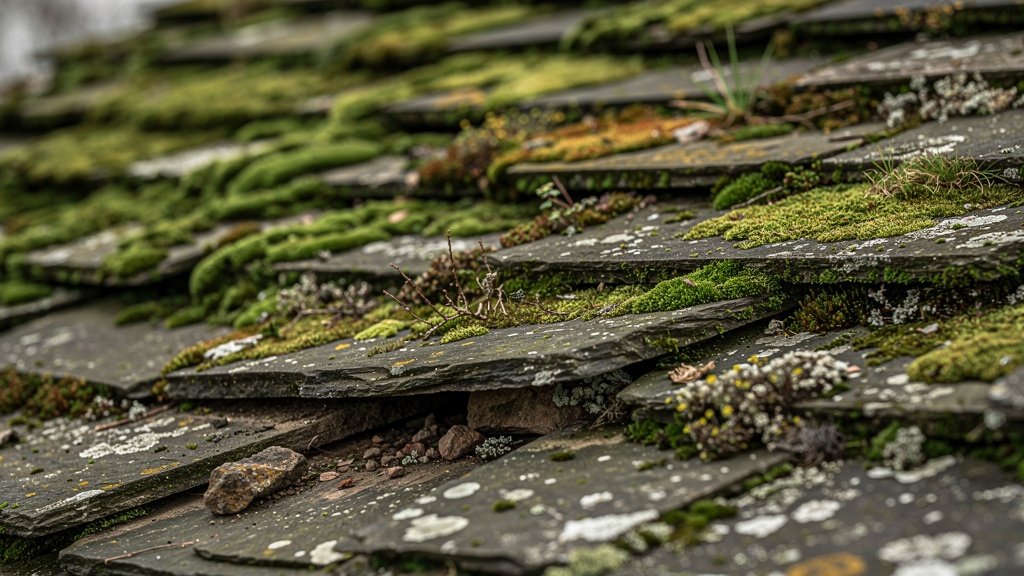
Moss, algae, and lichen growth on UK roofs is extremely common due to our damp climate, but many homeowners don't realize that this biological growth actively damages roof coverings and significantly shortens roof lifespan. My Roof Surveyor UK encounters moss-covered roofs daily, understanding exactly how biological growth forms, what damage it causes, and—critically—how to safely remove it without causing more harm than the moss itself.
This comprehensive guide explains everything UK property owners need to know about roof moss: why it grows, what problems it creates, how professional surveys assess severity, safe removal methods, and prevention strategies that protect your roof investment.
Understanding Biological Roof Growth
Three main types of biological growth affect UK roofs, each with different characteristics and impacts.
Moss Growth
Moss is the most visible and damaging biological growth:
- Appearance: Thick, green, cushion-like growth, often extensive
- Growth conditions: Thrives in damp, shaded areas with poor drainage
- Common locations: North-facing slopes, lower roof areas, under overhanging trees
- Root structure: Sends roots between and under tiles, physically lifting them
- Water retention: Acts like a sponge, keeping tiles constantly wet
Algae and Lichen
Less destructive than moss but still problematic:
- Algae appearance: Dark green or black streaks, particularly on concrete tiles
- Lichen appearance: Flat, crusty growth in various colors (grey, orange, yellow)
- Growth patterns: Spread across tile surfaces rather than building thick layers
- Damage mechanism: Break down tile protective coatings, making surfaces porous
- Prevalence: Common even on well-maintained roofs in certain conditions
Why UK Roofs Are Particularly Vulnerable
Several factors make British roofs especially prone to biological growth.
Climate Factors:
- High rainfall: UK's frequent rain provides constant moisture
- Mild winters: Biological growth doesn't fully die back during winter
- Limited sunlight: Particularly in northern regions and during winter months
- High humidity: Damp air supports spore growth even without rain
Environmental Factors:
- Tree coverage: Overhanging branches create shade and drop organic debris
- Air quality: Spores carried on wind settle on roof surfaces
- Roof orientation: North-facing slopes receive minimal direct sunlight
- Poor drainage: Areas where water pools encourage growth
Tile Properties:
- Porous surfaces: Aging concrete tiles with rough surfaces
- Granule loss: Protective coatings wearing away, exposing concrete
- Low pitch: Shallow roof pitches retain moisture longer
- Tile gaps: Spaces where moss can establish between tiles
A Devon cottage we surveyed had heavy moss coverage. Investigation revealed perfect growth conditions: north-facing slope under oak trees, 25-year-old concrete tiles with surface wear, and minimal pitch allowing moss to establish. The combination created an ideal moss habitat.
The Damage Moss and Algae Cause
Biological growth isn't merely aesthetic—it actively damages roof structures.
Physical Damage from Moss:
1. Tile Lifting and Displacement
- Moss grows underneath tile edges, physically lifting them
- Wind gets under lifted tiles, breaking fixings
- Tiles become loose and vulnerable to storm damage
- Water penetrates beneath displaced tiles
2. Water Retention and Freeze-Thaw Damage
- Moss retains water like a sponge, keeping tiles constantly damp
- Retained water freezes in winter, expanding and cracking tiles
- Freeze-thaw cycles accelerate tile deterioration dramatically
- Saturated battens beneath moss begin rotting
A Manchester property ignored moss growth for five years. When we surveyed, approximately 40% of tiles showed freeze-thaw cracks from moisture held by moss. What could have been a £600 moss removal became a £14,000 partial roof recovery.
3. Drainage Blockage
- Moss accumulates in valleys, blocking water flow
- Washes into gutters during rain, creating blockages
- Blocked valleys cause water backup under tiles
- Gutter blockages lead to overflow and wall damage
4. Root Penetration
- Some moss species send roots under tiles seeking moisture
- Roots penetrate breather membranes and roofing felt
- Compromised waterproofing allows leaks
- Root systems make moss extremely difficult to remove completely
Chemical Damage from Algae and Lichen:
- Surface breakdown: Organisms produce acids that dissolve protective coatings
- Porosity increase: Damaged surfaces absorb more water
- Accelerated weathering: Chemical action speeds natural tile deterioration
- Color changes: Staining that persists even after organism dies
How Professional Surveys Assess Moss Problems
Specialist roof surveyors evaluate both moss extent and underlying damage.
Assessment Criteria:
Coverage extent:
- Light: Less than 10% coverage, surface only
- Moderate: 10-40% coverage, some tile lifting
- Heavy: Over 40% coverage, significant tile displacement
- Severe: Dense coverage with tiles lifted, root penetration
Damage evaluation:
- How many tiles showing displacement or lifting
- Evidence of freeze-thaw cracking
- Batten condition beneath moss
- Drainage system blockage
- Underlying tile condition after considering moss effects
Treatment recommendations:
- Whether professional removal is necessary or moss is minor
- Safe removal methods for specific roof type
- Tile repairs needed after removal
- Prevention strategies to slow regrowth
- Future monitoring requirements
Safe Moss Removal Methods
Moss removal requires appropriate methods—incorrect removal causes more damage than the moss itself.
Professional Removal Approaches:
Hand Removal (Preferred Method)
- Careful manual removal using soft brushes and scrapers
- Minimizes tile damage while thoroughly removing moss
- Allows inspection and re-fixing of lifted tiles during process
- Time-intensive but safest for tile integrity
- Typical cost: £15-25 per m²
Chemical Treatment
- Biocide application kills moss, which then dies and loosens
- Usually followed by gentle manual removal weeks later
- Prevents regrowth for 2-4 years typically
- Requires proper application to avoid damage to gardens/wildlife
- Not suitable for all tile types
Combined Approach (Most Effective)
- Initial manual removal of heavy growth
- Chemical treatment for remaining moss and prevention
- Follow-up inspection and tile repairs
- Provides immediate improvement plus long-term protection
Methods to AVOID:
Pressure Washing
Never pressure wash moss from roofs:
- Strips protective coatings from tiles
- Drives water under tiles, causing leaks
- Damages tile surfaces, accelerating deterioration
- Breaks tiles and dislodges fixings
- Creates more problems than it solves
A Bristol homeowner pressure-washed their moss-covered roof themselves. They removed the moss but damaged over 30 tiles, stripped surface coatings from hundreds more, and caused three roof leaks. Professional repair cost £6,800—far more than proper moss removal would have cost (£950).
DIY Walking on Roof
- Extremely dangerous—falls from roofs cause serious injuries
- Walking on moss is slippery, increasing fall risk
- Foot traffic breaks tiles, especially fragile ones
- Insurance may not cover injuries or damage from DIY roof work
Prevention Strategies
While moss can't be prevented entirely in UK climate, growth can be slowed significantly.
Effective Prevention Measures:
1. Trim Overhanging Vegetation
- Cut back tree branches overhanging roof
- Increases sunlight reaching roof surface
- Reduces organic debris falling onto roof
- Improves air circulation, promoting drying
2. Improve Drainage
- Clear gutters regularly, preventing water backup
- Ensure valleys drain freely
- Address any ponding areas
- Verify downpipes aren't blocked
3. Regular Cleaning
- Clear debris from roof surface seasonally
- Remove moss when coverage is still light
- Inspect and clean valleys and difficult areas
- Don't allow heavy moss buildup before addressing
4. Copper or Zinc Strips
- Metal strips installed at ridge release ions that inhibit growth
- Provides some growth prevention, though not complete
- Requires proper installation for effectiveness
- Typically extends time between cleanings
5. Preventative Chemical Treatment
- Periodic biocide application after professional removal
- Slows regrowth for 2-4 years
- Cost-effective compared to repeated mechanical removal
- Must be applied correctly to avoid environmental harm
When to Call Professionals
Certain situations absolutely require professional assessment and removal.
Professional Help Required When:
- Moss coverage exceeds 20% of roof area
- Tiles show lifting or displacement
- Roof pitch is steep or height is significant
- Tiles are fragile (old slate, clay, or damaged concrete)
- You're uncertain about underlying damage extent
- Previous DIY removal attempts caused problems
- Roof age or condition makes walking on it risky
Key Takeaways
- Moss actively damages roofs through tile lifting, water retention, and freeze-thaw cycles
- UK climate makes biological roof growth extremely common
- Professional surveys assess both moss extent and underlying damage
- Never pressure wash moss—causes more damage than it prevents
- Hand removal by professionals is safest and most effective method
- Prevention strategies slow regrowth but can't eliminate it entirely
- Early treatment is far more cost-effective than delayed removal
- Regular maintenance prevents heavy moss buildup
Frequently Asked Questions
Yes, moss is more than cosmetic. It physically lifts tiles, retains water causing freeze-thaw damage, blocks drainage, and accelerates roof deterioration. Light moss coverage (under 10%) can be monitored, but moderate to heavy moss requires professional removal. Ignoring moss can shorten roof lifespan by 10-15 years and lead to expensive repairs when underlying damage becomes severe.
We strongly advise against DIY moss removal. Working on roofs is dangerous—falls cause serious injuries annually. Additionally, improper removal techniques damage tiles, and walking on moss-covered roofs is extremely slippery. Professional moss removal costs £15-25 per m², far less than medical bills, roof damage repairs, or worse. Professionals have proper safety equipment, insurance, and expertise to remove moss without causing damage.
Pressure washing causes extensive damage: strips protective coatings from tiles, drives water under tiles creating leaks, breaks tiles and dislodges fixings, damages tile surfaces accelerating deterioration, and creates far more problems than it solves. We regularly survey roofs damaged by pressure washing—repair costs typically exceed £3,000-£8,000, far more than proper professional moss removal. Never pressure wash roofs regardless of what cleaning companies claim.
Professional hand removal typically costs £15-25 per m² depending on extent, roof accessibility, and local rates. For an average UK semi-detached house (60-80m² roof area), expect £900-£2,000 including any minor tile repairs. Chemical treatment alone costs less (£8-12 per m²) but is most effective following manual removal. While this seems expensive, it's far cheaper than replacing tiles damaged by moss (£8,000-£15,000+) and extends roof lifespan significantly.
Moss will gradually return in UK climate, but proper removal combined with preventative treatment significantly slows regrowth. After professional removal with biocide treatment, expect 3-5 years before moss reaches levels requiring removal again. Prevention measures (trimming overhanging trees, regular drainage clearing, periodic preventative treatments) extend this period further. The goal isn't permanent elimination—it's managing growth at levels that don't cause damage.
Professional Moss Assessment and Removal
My Roof Surveyor UK provides comprehensive moss assessment as part of roof surveys, evaluating both biological growth extent and any underlying damage it has caused. Our surveys recommend appropriate removal methods, identify tiles requiring repair, and provide prevention strategies tailored to your specific roof and conditions.
We work with trusted roof maintenance specialists who use safe, effective moss removal techniques that protect tile integrity while thoroughly clearing growth and preventing rapid return.