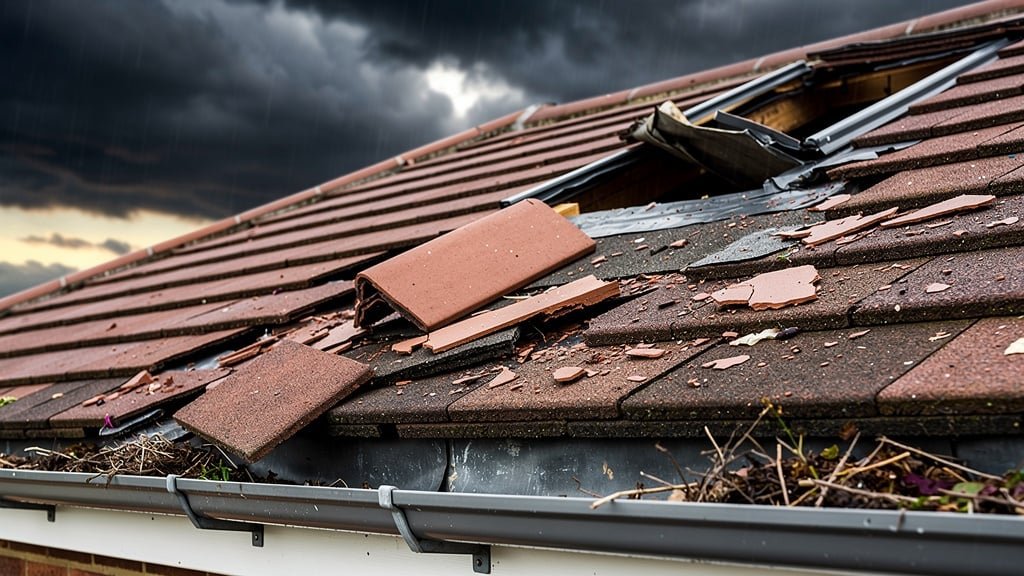
After severe weather hits the UK, thousands of homeowners discover roof damage that threatens their property and requires urgent attention. Storm Enoch, Storm Eunice, and countless other weather events have taught us that British roofs face unique challenges from wind, rain, and increasingly extreme weather patterns. Understanding how professional storm damage roof surveys work—and when you need one—can mean the difference between a quick insurance claim and months of costly repairs.
My Roof Surveyor UK has assessed hundreds of storm-damaged roofs across the country. In this comprehensive guide, we'll share everything you need to know about storm damage surveys, from identifying problems to working with insurance companies and protecting your home's structural integrity.
Understanding Storm Damage: More Than Just Missing Tiles
When most homeowners think of storm damage, they picture missing roof tiles scattered across their garden. While that's certainly one visible sign, storm damage often goes much deeper—and can be far more insidious.
The Hidden Impact of UK Storms
British weather patterns create unique challenges for residential roofs. Unlike tropical storms that bring catastrophic one-time events, UK storms deliver sustained winds, driving rain, and repeated freeze-thaw cycles that gradually compromise roof integrity. A single storm might not cause immediate visible damage, but it can weaken flashings, lift membrane edges, or crack sealants—setting the stage for serious problems months later.
Common types of storm damage we identify during surveys include:
- Wind Damage: Lifted, displaced, or completely missing tiles and slates. Wind gets under roof coverings and breaks the mechanical fixings or cement bonds holding them in place.
- Impact Damage: When wind-blown debris strikes your roof, it can crack tiles, puncture membrane, or damage flashing. Even small branches can cause significant damage at high velocity.
- Water Ingress: Driving rain penetrates through compromised areas, saturating insulation, damaging timber structures, and creating moisture problems that weren't immediately obvious.
- Structural Movement: Severe winds can cause subtle shifts in roof structure, leading to ridge tile displacement, valley problems, or even rafter movement.
- Flashing Failure: The lead flashing around chimneys, valleys, and abutments is particularly vulnerable to storm damage. High winds can lift edges, while temperature fluctuations cause cracking.
- Gutter and Drainage Damage: Overflowing gutters during storms, combined with wind pressure, can tear fixings, crack joints, or completely detach downpipes.
Why Immediate Assessment Matters
Here's what many homeowners don't realize: storm damage rarely improves on its own. That small lifted tile becomes an entry point for water. That hairline crack in flashing expands during the next freeze. That slightly displaced ridge tile allows wind-driven rain to penetrate, gradually saturating your loft insulation and timber structure.
We've seen cases where homeowners delayed getting a professional roof survey after a storm, thinking "it doesn't look that bad." Six months later, they're facing £15,000 in repairs because what started as a £500 tile replacement evolved into structural timber rot, collapsed ceiling plaster, and ruined possessions.
⚠️ Critical Timing for Storm Surveys
Most insurance policies require you to report storm damage promptly—typically within 48-72 hours of discovering it. Delaying your roof survey can jeopardize your claim. Schedule a professional inspection within days of a major storm, even if damage isn't immediately visible from ground level.
How Professional Storm Damage Surveys Work
When you contact My Roof Surveyor UK after storm damage, we follow a systematic approach designed to identify all problems, document them thoroughly for insurance purposes, and provide you with actionable recommendations.
Initial Assessment and Safety Evaluation
Before any surveyor climbs onto your roof, we conduct a preliminary safety assessment. Storms can compromise roof structural integrity, making access dangerous. We evaluate:
- Visible structural damage that might make roof access unsafe
- Loose materials that could fall during inspection
- Weather conditions (we won't access roofs during ongoing storms or high winds)
- The safest access method for your specific property
For properties where direct roof access seems risky, we'll recommend our drone survey service. Modern drones equipped with high-resolution cameras can capture every inch of your roof safely from the air, identifying damage without risking surveyor safety or causing further damage to already-compromised roof areas.
Comprehensive Visual Inspection
Our surveyors systematically examine every aspect of your roof structure:
Roof Covering Assessment:
We inspect every accessible section of your roof covering, looking for missing, cracked, slipped, or lifted tiles. On slate roofs, we check for delamination where freeze-thaw cycles have caused slate to split into layers. For concrete tiles, we assess whether the mortar bedding has been compromised.
Structural Evaluation:
From inside your loft space (where accessible), we examine timber rafters, purlins, and roof structure for signs of movement, cracking, or water damage. Storm-induced structural issues often manifest as hairline cracks in timber, displaced joints, or sagging ridge lines.
Flashing and Weatherproofing:
We carefully inspect all lead flashings, valley trays, and waterproofing details. These areas are particularly vulnerable to storm damage and often the source of leaks that cause extensive interior damage.
Drainage Systems:
Gutters, downpipes, and valley drainage receive thorough inspection. We look for blockages, cracks, displaced joints, and fixings that have pulled away from fascia boards during high winds.
Chimneys and Projections:
Chimney stacks endure tremendous wind forces. We assess for movement, damaged pointing, cracked pots, and compromised flashing seals.
Thermal Imaging Technology
For comprehensive storm damage assessment, we often employ thermal imaging cameras. This technology is invaluable because it reveals hidden moisture ingress that isn't yet causing visible interior damage.
After storms, water can penetrate small breaches in your roof covering and saturate insulation or timber structures without immediately appearing as ceiling stains. Thermal imaging detects these moisture-saturated areas by identifying temperature anomalies—wet insulation appears cooler than dry insulation, creating visible patterns on thermal imagery.
This early detection is crucial. Finding and addressing moisture ingress immediately after a storm prevents the development of mold, timber rot, and structural degradation that would cost thousands to repair later.
Documentation for Insurance Claims
One of the most important functions of a professional storm damage roof survey is creating bulletproof documentation for your insurance claim. We've worked with hundreds of insurance companies and understand exactly what they need to process claims efficiently.
Photographic Evidence
We capture extensive high-resolution photographs of every damaged area from multiple angles. This includes:
- Wide-angle shots showing overall roof condition and extent of damage
- Close-up detail photos of specific damage points
- Contextual images showing the property and surrounding area
- Comparative photos (when possible) showing undamaged sections versus damaged sections
- Interior photographs of any water ingress or damage to property contents
These photographs are georeferenced and time-stamped, providing indisputable evidence of damage occurrence and extent.
Detailed Written Report
Our comprehensive survey report includes:
Executive Summary: Clear statement of findings, overall assessment of damage severity, and immediate actions required.
Detailed Findings: Itemized list of every defect discovered, with precise descriptions, locations, and photographic references.
Cause Analysis: Professional opinion on whether damage was caused by the recent storm, pre-existing conditions, or a combination of factors. Insurance companies need this clarity.
Repair Specifications: Detailed specifications for necessary repairs, including materials, methods, and approximate scope of work.
Cost Estimates: Realistic repair cost estimates based on current UK market rates for materials and labor.
Urgency Assessment: Clear prioritization of repairs—what needs immediate attention to prevent further damage versus what can be scheduled later.
Working with Insurance Assessors
Many homeowners feel intimidated when dealing with insurance assessors. Our reports provide you with professional backup. When insurance companies send their own assessors (which they often do for significant claims), having an independent professional survey completed immediately after the storm protects you from disputes about what damage the storm caused versus what might be attributed to "wear and tear."
We've seen cases where insurers initially disputed claims, but our detailed photographic evidence and professional assessment convinced them to pay out in full. The cost of our survey (typically £400-£800 depending on property size and complexity) often saves homeowners thousands in claim disputes.
Common Storm Damage Scenarios
After assessing storm-damaged roofs across the UK for over a decade, we've identified several recurring patterns and scenarios that homeowners should understand.
Scenario 1: The "It Looks Fine" Hidden Damage Case
Mrs. Patterson in Bristol contacted us three months after Storm Eunice. "The roof looks okay from the street," she said, "but we're getting a damp smell in the spare bedroom." Our survey revealed that while no tiles were missing, the extreme winds had lifted several courses of tiles just enough to break their mechanical fixings. The tiles had settled back down and looked normal, but they were no longer properly secured.
More critically, that temporary lifting had allowed wind-driven rain to penetrate beneath them. The breather membrane had been compromised by age and the force of the water ingress, allowing moisture to saturate the insulation. By the time Mrs. Patterson called us, mold was growing on timber rafters, and the ceiling plaster was beginning to deteriorate.
The lesson: Never assume your roof is fine just because you can't see obvious damage from ground level. Professional surveys using drones and thermal imaging reveal hidden problems.
Scenario 2: The Domino Effect of Flashing Failure
Commercial property manager David Thompson manages a Victorian terraced conversion in Manchester. After winter storms, tenants reported "a few drips" around the chimney breast. The damage seemed minor—just some temporary water ingress during particularly heavy rain.
Our survey revealed that storm winds had lifted the lead flashing around the chimney stack, breaking the seal with the brickwork. Each subsequent rain event was driving water behind the flashing and down inside the chimney breast cavity. When we accessed the loft space, we found extensive water damage to timber, sodden insulation, and the early stages of dry rot developing in floor joists.
What could have been a £400 lead flashing repair became a £8,000 remediation project involving timber replacement, fungicide treatment, replastering, and full decoration. The insurance claim was complicated because the initial damage went unreported for months.
The lesson: Never ignore "minor" leaks after storms. They're usually symptoms of more significant underlying damage.
Scenario 3: The Gradual Degradation
Homeowner Janet Reynolds in Edinburgh didn't think her Victorian property needed a survey after winter storms because "it's survived for 130 years—it'll be fine." What she didn't realize was that age makes roofs more vulnerable to storm damage, not less.
Our survey (requested by her mortgage lender during a refinancing process) found that multiple storms over three winters had gradually degraded her original slate roof. Individual slates had slipped, creating dozens of small gaps. The battens supporting the slates had rotted in several areas due to repeated water ingress. Several rafters showed early signs of rot.
Because the damage had accumulated over time rather than occurring in a single event, her insurance policy wouldn't cover repairs—they classified it as "gradual deterioration" rather than storm damage. Janet faced a £22,000 bill for complete roof recovery.
The lesson: Regular professional roof surveys after major storms create a documented timeline of condition, making it much easier to prove insurance claims and catch problems while they're still manageable.
When to Call for Emergency Storm Survey
Some situations require immediate professional assessment, even before the storm has fully passed:
- Visible major damage: Missing sections of roof covering, exposed roof structure, or visible holes
- Active water ingress: Water coming into your property through the ceiling or walls
- Structural concerns: Sagging rooflines, visible movement, or cracking in load-bearing walls
- Dangerous loose materials: Tiles or sections of roof at risk of falling onto people or property
- Chimney damage: Leaning, cracked, or partially collapsed chimney stacks
For emergency situations, we provide rapid-response survey services, often attending within 24 hours to assess damage and arrange emergency make-safe works to prevent further deterioration.
Preventing Future Storm Damage
While you can't prevent storms, you can significantly reduce your roof's vulnerability through proactive maintenance and smart improvements:
Regular Professional Surveys: Annual or biennial professional roof surveys identify minor issues before storms turn them into major problems. A loose tile spotted during routine inspection can be fixed for £50. The same tile, if it comes loose during a storm and allows water ingress, might cause £5,000 of damage.
Proactive Maintenance: Keep gutters clear, trim overhanging branches, ensure flashings are properly sealed, and replace aging roof coverings before they fail.
Upgrade Vulnerable Areas: If surveys identify areas consistently affected by storms, consider upgrades. Modern mechanical fixings can replace aging nails in slate roofs. Improved flashing details can replace deteriorated lead work.
Documentation: Keep records of all roof maintenance and surveys. This documented history proves you've maintained your roof properly—crucial information if you need to make an insurance claim.
Key Takeaways
- Schedule a professional roof survey within 48-72 hours of any major storm
- Don't rely on ground-level visual inspection—many serious problems are hidden
- Comprehensive surveys with thermal imaging detect hidden moisture ingress
- Professional documentation is essential for successful insurance claims
- Minor visible damage often indicates more serious hidden issues
- Delaying surveys can jeopardize insurance claims and allow damage to worsen
- Regular preventative surveys reduce storm damage vulnerability
Frequently Asked Questions
Ideally within 48-72 hours of the storm or discovering damage. This timeframe satisfies most insurance policy requirements for prompt reporting. It also ensures you document damage before any further weather events complicate assessment of what the original storm caused. For severe damage with active water ingress, contact emergency survey services immediately.
Yes. Independent professional roof surveys from accredited surveyors like My Roof Surveyor UK are widely accepted by insurance companies. In fact, having your own professional survey completed immediately after storm damage strengthens your position if there are any disputes about the extent of damage or what the storm caused. Insurance companies may send their own assessors, but they must consider evidence from independent professionals.
Storm damage surveys typically cost £400-£800 depending on property size, roof complexity, and whether thermal imaging or drone technology is required. While this seems expensive, it's a worthwhile investment that often saves thousands by ensuring complete damage identification, proper documentation for insurance claims, and early detection of hidden problems. Many insurers will reimburse survey costs as part of successful claims.
We strongly advise against this for several reasons. First, storm-damaged roofs may have compromised structural integrity, making them dangerous to walk on. Second, walking on damaged roof coverings can cause further damage—and insurance companies may not cover damage you cause during your own inspection. Third, you likely lack the expertise and equipment to identify all problems, particularly hidden issues like moisture ingress or structural movement. Professional surveyors have the training, equipment, and insurance to conduct safe, comprehensive assessments.
Many serious storm damage issues aren't visible from ground level. Lifted tiles that have settled back down, compromised flashings, damaged membrane, moisture ingress, and structural movement often require close inspection, drone surveys, or thermal imaging to detect. If you've experienced severe storms and your property is older than 15 years, consider a professional survey even without obvious visible damage—it's a wise investment in protecting your home's value and your family's safety.
Get Your Professional Storm Damage Assessment
Don't gamble with your home's protection. If your property has experienced storm conditions, contact My Roof Surveyor UK for a comprehensive professional assessment. Our independent surveyors will identify all damage, document everything for your insurance claim, and provide you with clear recommendations for protecting your property.
We operate across the UK with rapid response times and competitive pricing. Our detailed reports have helped hundreds of homeowners successfully claim for storm damage and protect their properties from further deterioration.